
How Ultrasound Facials Tighten Skin
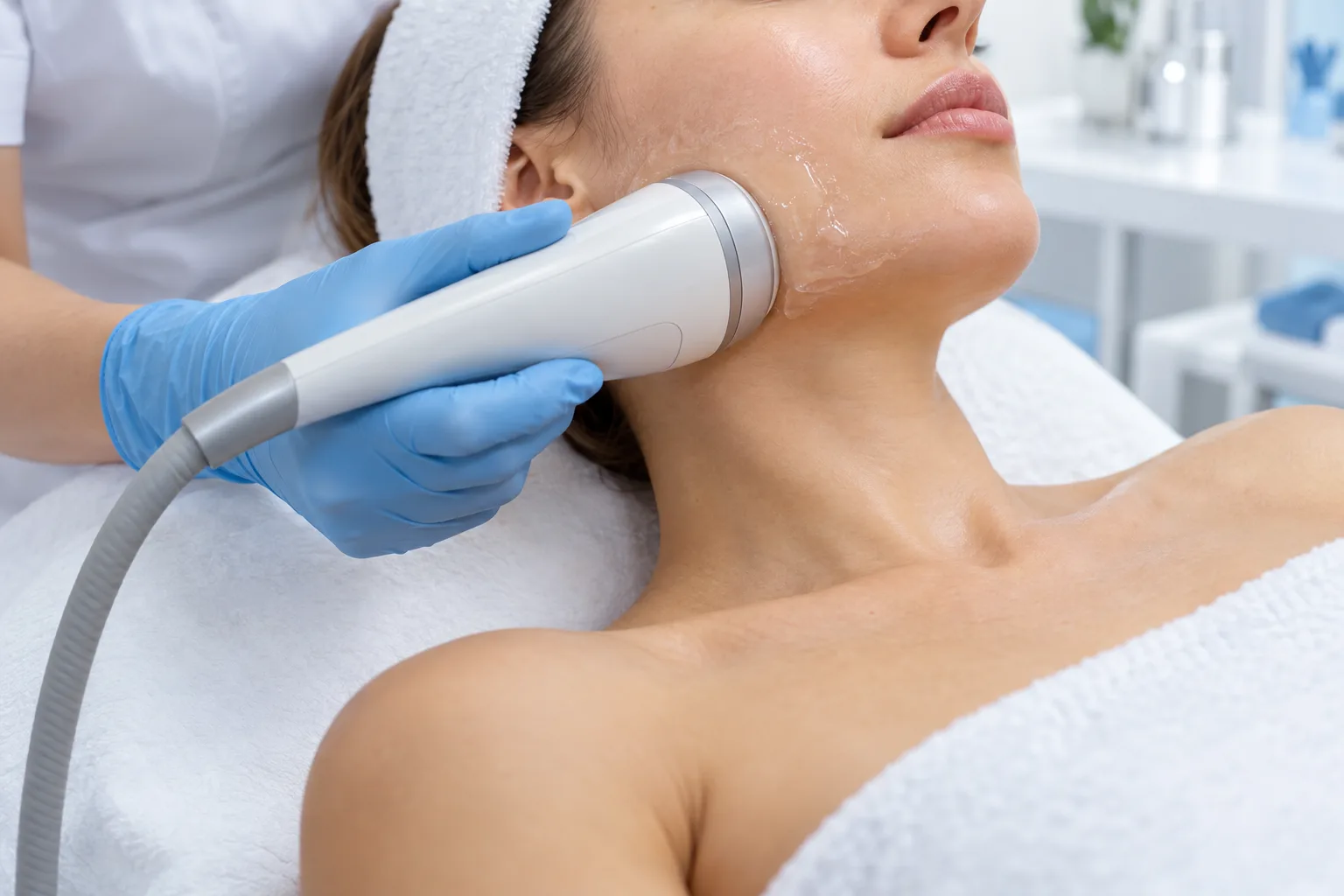
Skin that looks a little less taut than it did a few years ago is the smallest symptom, and the place to start.
Ultrasound facials are one noninvasive response to that symptom. What follows covers how the treatment works, what the sources say about timing and side effects, and what to settle before booking.
Where the slackening starts
Cleveland Clinic explains that skin synthesizes less collagen each year after about the age of 20. It adds that estrogen levels also decrease after menopause, leaving skin drier, thinner and less taut than before.
That sequence matters for anyone watching for early signs. Noticing a loss of tautness early leaves time to compare options in order, instead of reacting to the most visible sagging first.
What the device does under the surface
Cleveland Clinic describes a noninvasive treatment that uses high-intensity focused ultrasound, known as HIFU, to target deep tissue layers and stimulate new collagen growth. It also notes that the FDA has approved the treatment.
Depth is the point of the technique. According to Cleveland Clinic, an ultrasound skin tightening device typically reaches 5 millimeters deep under the skin, into the second layer of muscles underneath the facial muscles. The same source says lasers do not go that deep, and that going deep matters because that is where skin makes new collagen.
In a separate procedure page, Cleveland Clinic describes a handheld device that emits focused ultrasound energy into the deep layers of the skin. The energy heats the targeted tissue and triggers a natural healing response, which stimulates new collagen and gradually tightens and lifts the treated skin.
The American Academy of Dermatology gives the same outline in plainer terms: dermatologists use ultrasound to send heat deep into the skin, and the heat can cause the body to produce more collagen.
The full explanation is in Cleveland Clinic's article on how ultrasound facials can tighten skin.
What the treatment is meant to improve
Cleveland Clinic says an ultrasound facial helps stimulate collagen and may also smooth wrinkles, improve skin elasticity, reduce the appearance of jowls, lift drooping eyelids or eyebrows and tighten the decolletage.
A list of possible benefits is not a promise. Ask the practitioner which of them applies to the area that bothers you, and what a realistic change looks like for your skin.
How long results take
Waiting is the part most easily misread. Cleveland Clinic says most people see the full effect about three to six months after the procedure, though some notice initial effects sooner. One treatment is usually sufficient, but some people need three or more sessions to reach the goal they set.
The American Academy of Dermatology gives a similar range. With one treatment, most people see modest lifting and tightening within 2 to 6 months, and additional treatments may bring more benefit.
Because the sources place the full effect months out, a result judged after a few weeks can say very little. A useful question for the practitioner is when the result should be judged and what would count as a reason to add a session.
Side effects worth tracking
Cleveland Clinic says there is essentially no downtime with an ultrasound facial, but minimal bruising and tenderness are possible. Slight redness may appear where the skin was treated for about an hour afterward. These side effects are typically temporary.
Tenderness is the one to track. The same source notes that in some cases skin tenderness may last for a month after treatment. Anything outside the ranges described here is a question for the treating provider.
Who may not be a good candidate
Cleveland Clinic says that people who are pregnant, are breastfeeding or have an autoimmune disease such as lupus or rheumatoid arthritis may not be good candidates for this procedure and should speak with their healthcare provider.
Tell the practitioner your full health history before the appointment is set, not after. The candidacy question comes first because it can end the discussion before cost and scheduling matter.
A sensible order of checks
Start with candidacy, since some conditions may rule the treatment out. Move to expectations: which benefits are realistic, when to judge the result, and how many sessions may be needed. Finish with side effects and what to watch for afterward.
Readers who want to compare ultrasound with other approaches can start with this overview of non-invasive skin tightening treatments. Compare options before committing.