
Skin Conditions Lasers Can Treat
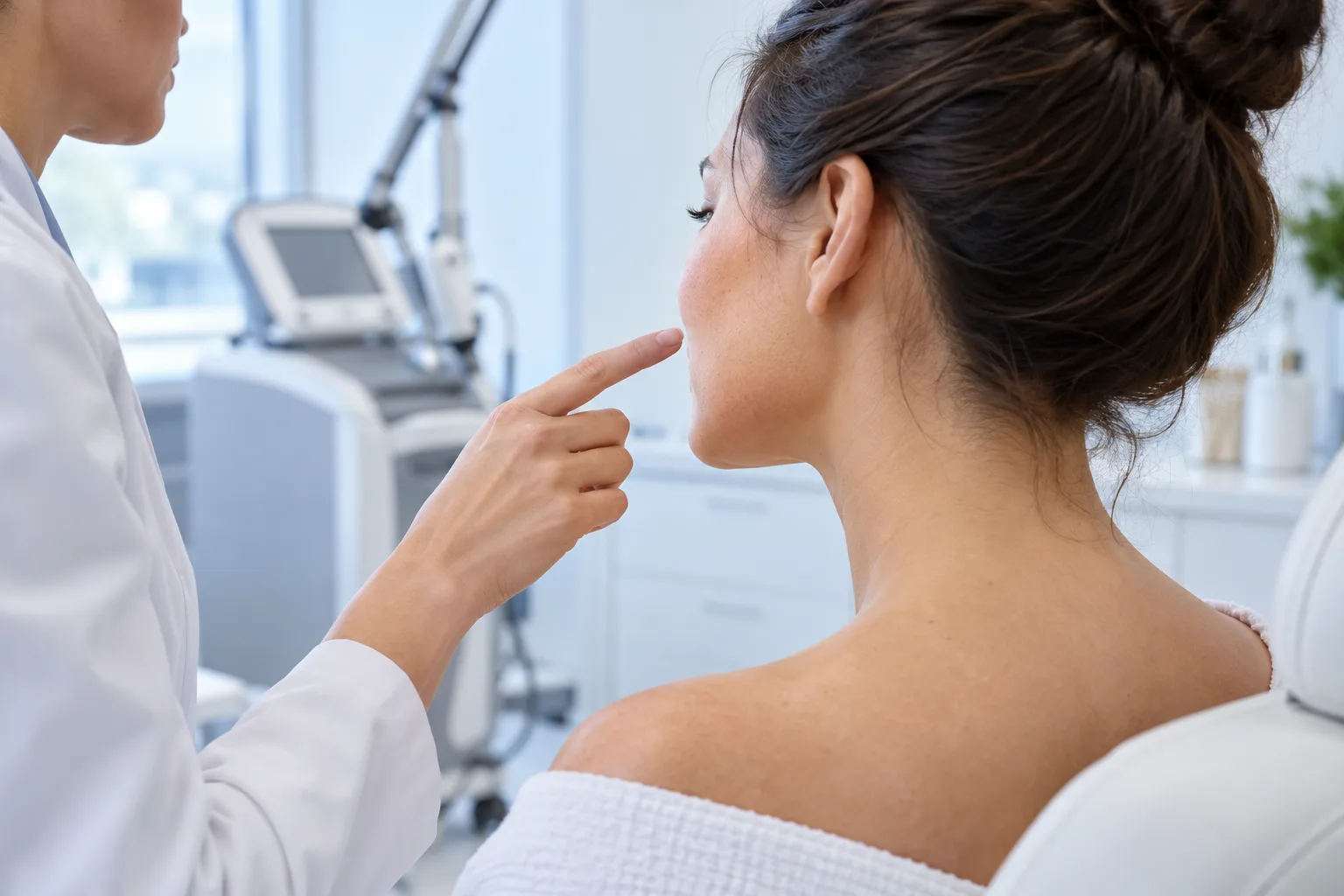
A patch of redness that never settles, or a thread-fine red line near the nose, is the kind of small symptom that sends people looking into lasers.
Lasers and light devices are used for a wide range of skin concerns. The sections below follow the sources through those concerns, then through the question of who performs the treatment.
Redness and visible blood vessels
The American Academy of Dermatology says laser treatments are effective at reducing rosacea, red birthmarks, broken blood vessels and other red spots on the skin. A board-certified dermatologist quoted there says lasers are safe for targeting blood vessels in all skin types but often require several treatments. Most patients do not need downtime, though occasionally there may be some bruising for a few days after a treatment.
The American Society for Dermatologic Surgery describes laser and light therapy as a non-ablative option for facial redness. It uses an intense but gentle beam of light to remove facial redness without damaging surrounding tissue, and pain and recovery time are typically minimal.
The mechanism is simple to state. According to the American Society for Dermatologic Surgery, vascular lasers emit wavelengths of light that target tiny blood vessels just under the skin. Heat from the laser's energy builds in the vessels, causing them to disintegrate. Generally, at least three treatments are required, depending on the severity of redness or visible blood vessels.
Practical reading of that: a single session is unlikely to be the whole plan. The overview of laser and light therapy is a reasonable place to see how the category is organized.
Spider veins
Spider veins follow the same logic. The American Society for Dermatologic Surgery says that during laser or light therapy a laser is applied to the spider veins, and it transmits photons that are absorbed by the blood cells in the veins. That generates heat that destroys the blood vessel.
The damaged vein shrinks and eventually dissolves over time. The word to watch there is "eventually." Ask the provider how long the process is expected to take before judging any single session.
Birthmarks, including in children
The American Academy of Dermatology notes that some lasers, such as pulsed dye lasers and intense pulsed light therapy, are safely used on infants and children to treat a wide range of conditions, including port wine stain and hemangioma birthmarks.
In most cases, intense pulsed light treatments require about two to three sessions, according to a dermatologist quoted by the same source, and are then followed up once yearly to maintain optimal results.
Unwanted hair
The American Academy of Dermatology explains that a laser initially developed for tattoo removal is now commonly used for hair removal. It has shown to be effective on darker skin, where many other lasers may be unsafe.
Laser hair removal can be performed on all skin types and colors, as long as there is a contrast between the skin and the hair color. Depending on how many treatments are received, most of the treated hair can be destroyed.
Light plus medication for psoriasis and precancerous spots
The American Academy of Dermatology says dermatologists use a combination of light energy and a light-sensitive medication to treat many different diseases, including psoriasis and some types of skin cancer.
A dermatologist quoted there describes the sequence. The light-sensitive medication is applied to the skin first, and about an hour or two later red light, blue light or intense pulsed light is applied. The light activates the medicine, which destroys the precancerous or cancerous spots.
Signs of aging, scars and melasma
The American Academy of Dermatology adds that laser and light treatments are also useful to reduce premature signs of skin aging such as wrinkles and age spots. They can reduce scars, including scars caused by acne, tighten skin, reduce melasma and treat spider veins, among other concerns.
For resurfacing in particular, dermatologic surgeons publish an overview of laser resurfacing. Resurfacing and light therapy are not the same category, so the first question for any provider is which kind of device is being proposed and why.
Skin tone and who holds the laser
The American Academy of Dermatology says that while lasers can be used on all skin types, darker skin is more prone to burns and dark marks after laser treatments. Its advice is to work with a board-certified dermatologist who has experience treating darker skin with lasers.
It also states that the results of a laser procedure depend largely on the skill of the person performing it. Laser procedures in non-medical settings such as spas and shopping malls may offer convenience, but the limited training, supervision and equipment available there may jeopardize health and safety.
Starting from the symptom
Start with the symptom, not the device. Name the smallest thing that bothers you, whether redness, a visible vein, a scar or a dark patch. Then ask which kind of laser or light treatment is proposed for it, how many sessions are expected, and what the provider's training and experience are with your skin tone.
Settle those three answers before booking.